

How to Mitigate Risks When Choosing a Funeral Home Buyer | Expert Guide 2025
Selling your funeral home is one of the most significant decisions you’ll make, both financially and emotionally. With the U.S. funeral home market expected to see increased transaction activity in 2025, choosing the right buyer is crucial to protect your legacy, ensure a smooth transition, and maximize the value of your funeral home business. This comprehensive guide explores practical steps to mitigate risks when selecting a funeral home buyer — helping you navigate the complexities with confidence.
Understanding the Current Funeral Home Market in 2025
The funeral home industry is evolving rapidly, with an increased number of owners planning to sell or transition their businesses. According to IBISWorld, the U.S. funeral services market generates over $20 billion annually, with modest growth forecasted over the next five years. This growth, combined with many owners reaching retirement age, has created a robust market for funeral home sales.
However, the influx of buyers — from large publicly traded firms to family-owned private buyers — makes it essential for sellers to thoroughly understand buyer profiles and market trends. Knowing what buyers are looking for and how your funeral home fits into the landscape is the first step toward reducing risks in your sale.
Key Risks to Mitigate When Choosing a Funeral Home Buyer
1. Know What Buyers Are Looking For
Buyers in today’s market vary widely: from corporate groups like Service Corporation International (SCI) and Park Lawn, to regional players and smaller local operators. Most buyers seek funeral homes with:
- At least 150 calls per year
- Approximately $1 million in annual revenue (net of cash advances)
- Strong community reputation and growth potential
If your funeral home is below these thresholds, it’s still possible to attract buyers, especially if you are near an existing buyer’s location. Understanding buyer criteria helps you tailor your sale strategy and position your business more effectively.
2. Evaluate Your Competitive Position
Knowing how your funeral home stacks up against local competitors is essential. Buyers often do not have full insight into your market dynamics, so presenting clear data on your call volume, revenue streams, and service mix (traditional burial vs. cremation) is critical.
Consider engaging a valuation expert or advisor to provide market trend analysis. Many funeral homes no longer post complete obituaries online, making public data incomplete. By offering thorough documentation, you improve buyer confidence and reduce risk of undervaluation.
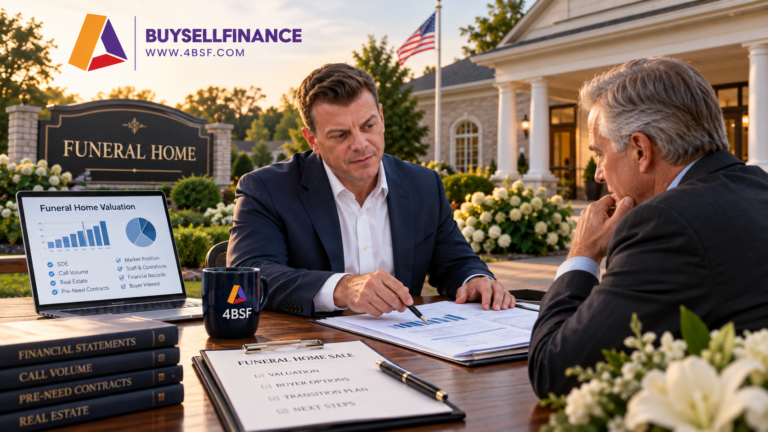
3. Have Your Financials in Order
One of the most significant red flags for buyers is unclear or inconsistent financial data. Well-organized and transparent financials — including gross sales, cash advances, salaries, and advertising expenses — demonstrate your professionalism and the health of your business.
According to industry benchmarks, average funeral home salaries account for approximately 30-35% of revenue, and cash advances typically represent 15-20%. Buyers will compare your numbers to these standards, so having accurate data can prevent surprises and support a stronger sale price.
4. Work with an Experienced Advisor
Selling a funeral home without expert guidance increases risks substantially. An experienced funeral home advisor like 4BSF can:
- Identify qualified buyers who fit your business profile
- Help you navigate legal, financial, and regulatory complexities
- Structure the sale to protect your interests and legacy
- Manage confidentiality and smooth transitions
Industry data shows that sellers who work with advisors tend to close deals faster and at higher valuations, while minimizing costly mistakes.
5. Interview Multiple Buyers
Running a competitive sales process — often through an “auction-style” approach — allows you to evaluate offers, buyer qualifications, and cultural fit. Advisors can help you prepare confidential information memorandums, conduct buyer screenings, and coordinate site visits discreetly.
Evaluating several buyers helps you identify the one best aligned with your post-sale goals and mitigates the risk of selling to an unsuitable party who may jeopardize your funeral home’s future.
6. Understand Post-Transaction Goals
Clarify your own goals for after the sale: Do you want to retire immediately? Stay involved as a consultant? How important is staff retention? Buyers have different expectations regarding seller involvement and transition periods.
A buyer’s willingness to accommodate your retirement and legacy goals can be a deciding factor. An advisor will help align these expectations upfront to avoid conflicts later.
When preparing to sell your funeral home business, understanding the top legal considerations is crucial to ensure a smooth and compliant transaction.
Additional Data and Insights
- Industry demographics: The average funeral home owner is over 60 years old, creating a wave of potential sales in the next decade.
- Consolidation trends: Private equity-backed firms now own approximately 25% of U.S. funeral homes, making due diligence on buyer stability and long-term intentions vital.
- Sale multiples: Funeral homes typically sell for 5x to 7x EBITDA, but multiples can vary based on location, call volume, and real estate assets.
Ready to Sell Your Funeral Home Business the Right Way?
If you are considering selling your funeral home and want to mitigate risks while maximizing value, contact 4BSF Funeral Home Advisors. With over 20 years of industry expertise, we offer personalized, confidential guidance tailored to your unique business and legacy goals.
Visit our Sell Your Funeral Home page to learn more or schedule a free consultation today.
Contact Matt Manske, Member of BSF LLC
(913) 343-2357 | matt@4bsf.com | 4bsf.com
FAQs: Mitigating Risks When Choosing a Funeral Home Buyer
Q1: How can an advisor help reduce risks in my funeral home sale?
An advisor vets buyers, manages confidentiality, provides market insight, and structures deals to protect your interests. They act as your advocate throughout the process.
Q2: What financial documents should I prepare for buyers?
Prepare 3+ years of tax returns, profit & loss statements, cash flow reports, and a detailed list of liabilities like preneed obligations.
Q3: Are corporate buyers always better than local buyers?
Not necessarily. Corporate buyers offer resources and scale but may change your funeral home’s culture. Local buyers may preserve legacy but might offer less capital.
Q4: How important is confidentiality during the sale?
Extremely important. Premature disclosure can upset staff, clients, and local reputation. Advisors use NDAs and discreet marketing to protect your privacy.
Helpful next steps for this topic


Please Share this Article if you think others would find it Informative:
