
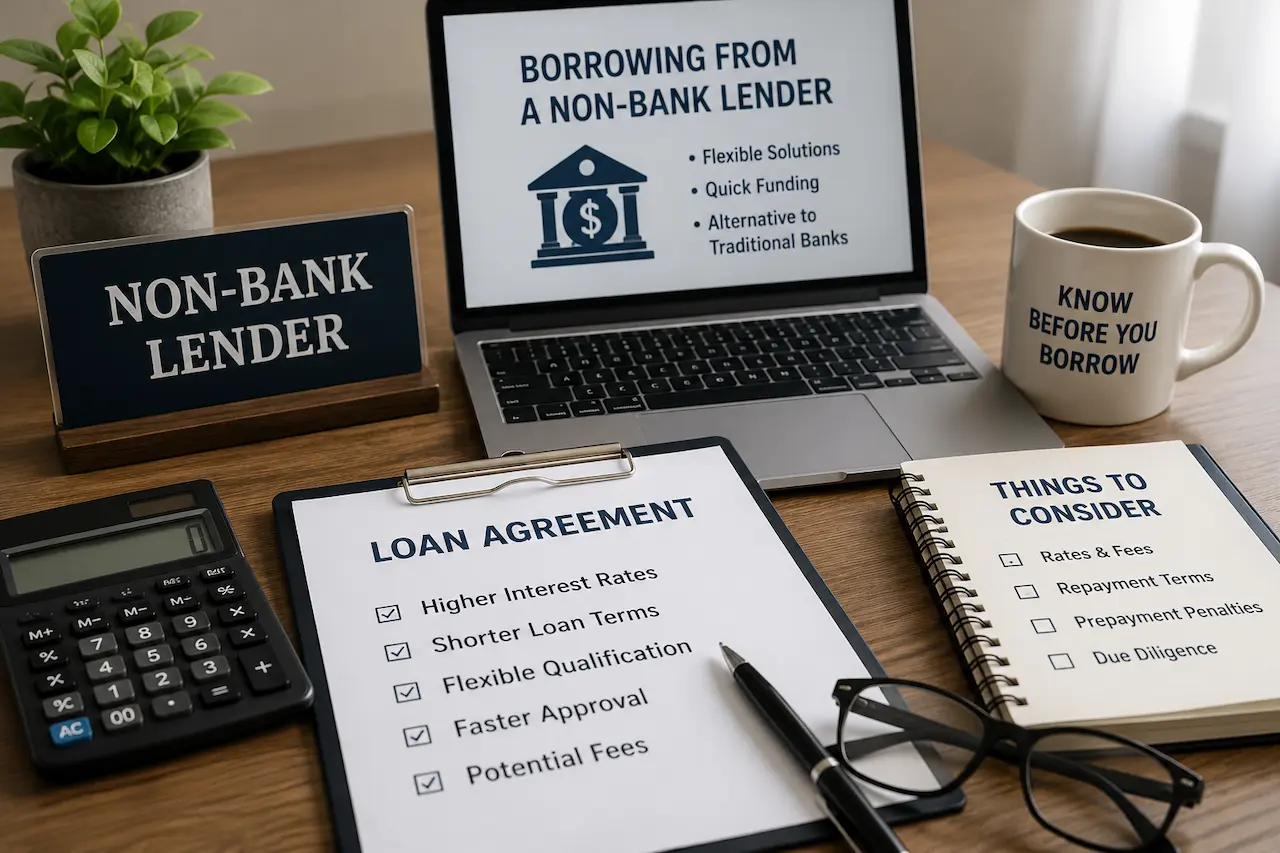
What Should I Know About Borrowing From a Non Bank Lender
A non-bank lender is a financial company that offers loans without holding customer deposits, relying instead on interest income to fund the business. Non-bank lenders typically approve loans faster and evaluate borrowers on current cash flow rather than strict credit history, often at a higher interest rate than a traditional bank.
Because they are not traditional banks, they follow different approval guidelines and often provide faster decisions. Many borrowers choose non bank lenders because their requirements are more flexible. They focus more on the borrower’s actual financial performance rather than strict credit history rules.
This relaxed structure allows borrowers who may not qualify for a bank loan to still secure funding. Non bank lenders fill a growing space in the financial market by offering options that support business growth, cash flow management and investment opportunities.
2. Why Borrowers Consider Non Bank Lending
Borrowers choose non bank lenders for several reasons. One of the most common reasons is the speed of the approval process. Banks often require detailed documentation, long underwriting periods and strict credit conditions. This process can take weeks or months. Non bank lenders usually review applications much faster and issue decisions within days.
Borrowers also consider non bank lenders when traditional banks decline their loan applications. Banks may reject loans for reasons such as low credit scores, insufficient collateral, limited business history or non traditional income patterns. Non bank lenders evaluate borrowers differently and may approve loans that banks avoid.
Another reason borrowers choose non bank lenders is the flexibility of loan terms. Some lenders tailor loans based on the borrower’s cash flow, revenue patterns or project needs. This flexibility helps borrowers who have seasonal income or businesses that require short term capital.
3. How Non Bank Lenders Evaluate Borrowers
Non bank lenders review several factors before approving a loan. These factors usually differ from bank requirements. They may include current cash flow, business performance, revenue stability and future earning potential. Some non bank lenders focus on the borrower’s ability to repay rather than past credit challenges.
Borrowers must provide clear information about their financial situation. This usually includes bank statements, tax records, financial reports and business performance summaries. For business loans, lenders may request details about operations, revenue sources, customer base and management experience.
Non bank lenders look for signs that the borrower can make regular payments. They often place more importance on present financial health rather than long term credit history. This is one of the main reasons borrowers who do not qualify for bank loans consider alternative lenders.
4. Comparing Banks and Non Bank Lenders
Banks and non bank lenders operate under different structures. Banks offer lower interest rates because they have access to customer deposits which reduces their cost of lending. However banks require strict documentation, detailed credit checks and stable financial records. These requirements can be difficult for some borrowers.
Non bank lenders often charge higher interest rates but offer faster approval and fewer restrictions. They do not rely on customer deposits, so they must protect their risk through interest and loan terms. Borrowers must understand that the convenience of faster loan approval may result in higher cost.
There is no single correct choice. The best option depends on the borrower’s needs, credit strength, timeline and financial condition. Borrowers must compare both lenders carefully before making a final decision.
5. Interest Rates and Loan Terms in Non Bank Lending
Non bank lenders set interest rates based on risk, loan type and borrower profile. Rates may vary widely depending on the company and loan product. While the rates might be higher than bank loans, they often reflect the level of flexibility offered.
Loan terms can include shorter repayment schedules, higher monthly payments or specific conditions. Some lenders offer interest only periods while others require full principal and interest payments from the beginning. Borrowers must review the terms closely before accepting any agreement.
Understanding the cost structure helps borrowers avoid unexpected expenses. Everything should be discussed upfront including late payment policies, early repayment fees and administrative charges.
Borrowers who want to understand how financing applies specifically to funeral home acquisition or refinancing can review additional information which includes professional background on advising funeral home buyers and sellers.
Although non bank lenders often require fewer documents, they still need enough information to understand the borrower’s situation. Borrowers may need to provide identification, bank statements, financial summaries, tax records and proof of income.
Some lenders request business plans, revenue reports or a description of how funds will be used. Others may focus on current assets, collateral or contracts that support repayment.
Business borrowers may need to show operational records, staffing details or vendor agreements. Borrowers must gather documents early to avoid delays during approval. Being prepared helps speed up the process and increases approval chances.
7. The Approval Process
The approval process for non bank loans is usually faster than traditional banks. Once documents are submitted, lenders review them and often respond within a few days. Some online lenders provide approval within the same day.
The process includes reviewing the borrower’s financial strength, ability to repay and overall business health. For business loans, lenders may interview the owner or request short clarifications. After approval, funds can be released quickly which helps borrowers handle urgent needs.
This speed is one of the strongest advantages of non bank lending. Borrowers who need fast assistance often prefer these lenders over traditional banks.
8. Risks Associated With Non Bank Lending
Borrowers must understand that non bank loans carry risks. The most common risk is higher interest cost. Borrowers may also face shorter repayment schedules which require strong cash flow. Some loans include steep penalties for missed payments or early repayment.
Another risk is limited regulation. Non bank lenders may not be supervised under the same guidelines as banks. Borrowers must research lenders carefully to avoid unlicensed or untrustworthy operators. Reading reviews, checking credentials and reviewing contracts are essential steps before signing any agreement.
Borrowers must also make sure they understand every part of the loan. Misunderstanding the terms can lead to financial difficulty. Careful reading and clear communication protect borrowers from unexpected challenges.
9. Advantages of Working With a Non Bank Lender
Despite the risks, there are several advantages to working with non bank lenders. These lenders provide faster approval, flexible loan structures and greater accessibility. Borrowers with unique financial situations may find these lenders more understanding than banks.
Another important advantage is the variety of loan types. Some lenders specialize in small business loans, asset based loans, project financing or cash flow loans. This specialization helps borrowers find a product that matches their specific needs.
Flexibility is the core benefit. Borrowers who need creative financing solutions often choose non bank lenders because they provide options that banks avoid.
For industry specific financing such as funeral home acquisition, buyers can review resources which supports buyers in evaluating financing and acquisition opportunities.
10. How to Compare Non Bank Lenders
Borrowers must compare lenders carefully by reviewing several elements. These include interest rates, loan fees, repayment schedule, approval requirements, customer reviews and lender reputation. Borrowers should also compare customer service quality because communication plays a major role during repayment.
Comparing lenders helps borrowers find the best option based on their needs. Borrowers should avoid choosing the first available lender without understanding the complete terms. Thorough research prevents financial difficulties and ensures the borrower selects a trustworthy provider.
Borrowers who want insights about selling or refinancing a business such as a funeral home can explore information which provides guidance for sellers preparing for valuation and financing reviews.
11. How to Read and Understand Loan Agreements
Loan agreements contain important information such as interest rates, payment structure, penalties, rights and responsibilities. Borrowers must read these agreements slowly and carefully. They should look for details about fees, default rules, collateral requirements and renewal conditions.
Understanding these agreements protects the borrower from unexpected financial obligations. If any part of the agreement is unclear, borrowers should request clarification before signing. Reviewing the agreement with a financial advisor or accountant can also help.
Loan agreements are legally binding. Borrowers must make sure they understand every part before accepting the loan.
12. Borrowing From Non Bank Lenders for Funeral Home Financing
Many business owners, including funeral home buyers and operators, consider non bank lenders for business expansion, acquisition or refinancing. These lenders may offer flexible loan structures tailored to the financial patterns of service based industries. Buyers who need support in this area can review guidance for location based insights.
Borrowers must evaluate how repayment plans match business cash flow. Funeral homes often have seasonal patterns and long term service cycles. Understanding how loan terms interact with these patterns helps owners avoid cash flow problems.
Non bank lenders can support growth by providing fast and flexible funding, but owners must choose lenders wisely and review all terms with care.
Conclusion
Borrowing from a non bank lender can be a practical choice for many borrowers who need faster approval, flexible terms or access to financing that a traditional bank may not offer. These lenders evaluate financial situations differently and often focus on current performance rather than strict credit history. This flexibility can make borrowing easier, but it also requires careful review.
Understanding interest rates, repayment schedules, lender reputation and documentation requirements helps borrowers avoid unexpected risks. Non bank lending provides valuable opportunities for business owners, individuals and those seeking alternative financing. When borrowers take time to compare lenders and understand every part of the agreement, they can make informed decisions and choose the option that best supports their needs.
Why Choose Us
We provide clear and simple explanations that help readers understand financial topics without confusion. Our writing focuses on real world examples and industry accurate information so that new readers and experienced borrowers can make confident decisions. We explain complex processes in a way that supports understanding and builds trust.
Our guidance is based on how borrowing works in actual lending environments. We present detailed information in an organized and readable format so that readers can quickly understand what matters most. Whether someone is exploring financing for personal needs or considering business expansion, our approach delivers clarity and practical insight.
Frequently Asked Questions
Is a non-bank lender safe to borrow from?
Yes, when the lender is properly licensed and transparent about terms. We advise every borrower to check licensing, read reviews, and confirm the lender’s reputation before signing.
Do non-bank lenders charge higher interest rates than banks?
Usually, yes. Non-bank lenders don’t have access to customer deposits, so they price in more risk through the interest rate — in exchange, approval is typically faster and requirements are more flexible.
Can I get approved with a low credit score?
Often, yes. Non-bank lenders weigh current cash flow and financial performance more heavily than credit history, which can make approval possible where a bank would decline.
What documents do non-bank lenders require?
Most ask for identification, bank statements, tax records, and proof of income. Business borrowers, including funeral home buyers, may also need financial statements and revenue summaries.
Is a non-bank lender the right choice for a funeral home acquisition?
It depends on your timeline and credit profile. We often see funeral home buyers combine a non-bank loan with SBA or seller financing when speed matters more than securing the lowest possible rate.
Helpful next steps for this topic






Please Share this Article if you think others would find it Informative:
