
Sell Your Funeral Home in Pennsylvania With Confidence
From Philadelphia and the Lehigh Valley to Harrisburg and Pittsburgh, a Pennsylvania funeral home is valued on its earnings, call volume, real estate, preneed and whether a qualified buyer can finance the deal. Matt Manske guides Pennsylvania owners privately from valuation through closing.


Get Your Confidential Pennsylvania Valuation
- 1Share a few details
- 2Private call with Matt
- 3Valuation & options
Send us a message
Fill in the details below and we'll get back to you shortly.
One of the most established funeral markets in the Northeast
Pennsylvania has hundreds of licensed funeral establishments, and a large share are multi-generational family firms whose names have served the same neighborhoods and towns for decades. That legacy is valuable, but it also means many owners are approaching a sale for the first time, often without a clear succession plan inside the family.
Buyer interest comes from Pennsylvania independents expanding their footprint, regional groups, and cross-market buyers from New Jersey, New York, Maryland, Delaware and Ohio who see Pennsylvania as a natural next step. The right outcome depends on matching your funeral home with a buyer who can finance the deal, keep your staff, and respect what you have built.
How 4BSF Helps Owners Sell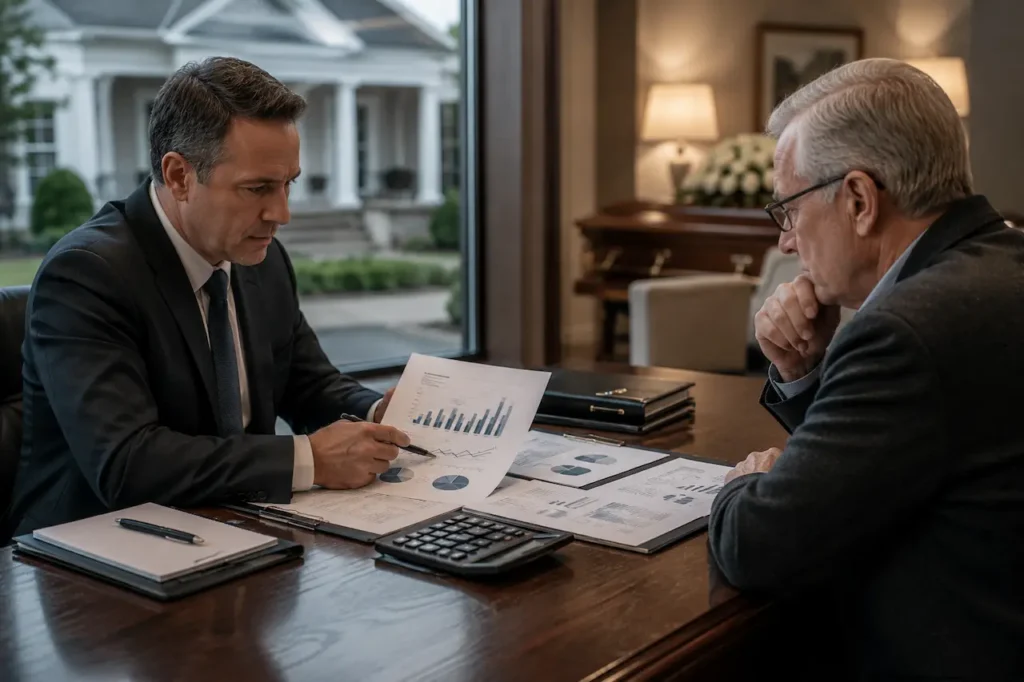
Pennsylvania funeral home markets we work with
Pennsylvania is several distinct markets in one state. Real estate values, competition, cremation trends and the buyer pool look very different in Center City Philadelphia than in a borough in the Northern Tier.
Philadelphia and the Collar Counties
The highest-value market in the state. Dense neighborhoods, strong real estate values, and the deepest pool of regional and cross-market buyers, including New Jersey and Delaware operators. Older urban facilities make building condition, parking and zoning important to value.
Pittsburgh and Western Pennsylvania
An established, relationship-driven market with many long-standing family firms. Buyers look closely at call-volume trends, community relationships, and how the business performs outside the city core.
Allentown, Bethlehem and Easton
One of the fastest-growing regions in Pennsylvania, drawing buyers who also operate in New Jersey and the Philadelphia suburbs. Population growth can support stronger buyer interest when the financials back it up.
Harrisburg, Lancaster and York
A stable mix of suburban and small-city funeral homes with steady demand. Buyers here often value consistent local call volume and well-maintained facilities over size.
Scranton and Wilkes-Barre
Strong community and parish relationships define many funeral homes in this region. Transition planning and staff retention carry real weight with buyers.
Rural and Small-Town Pennsylvania
Many Pennsylvania funeral homes serve boroughs and townships where they are the trusted name in the community. A smaller market should be valued on its own economics, local recognition and limited competition, not automatically discounted because of population size.
Talk through your Pennsylvania funeral home privately.Call Matt Manske directly. No listing, no obligation.
(913) 343-2357What makes a Pennsylvania sale different
Pennsylvania has its own licensing framework and preneed rules. These are the areas we see shape Pennsylvania transactions most often.
01State Board Oversight
Funeral directors and establishments are licensed through the Pennsylvania State Board of Funeral Directors under the Department of State. Changes in ownership and supervision need to be coordinated with the Board so the business can keep operating without interruption.
02Ownership Structure
Pennsylvania's Funeral Director Law includes specific rules on who may hold an interest in a licensed establishment and how branch locations are supervised. The buyer's entity and licensing plan should be reviewed with Pennsylvania counsel early, not after the letter of intent.
03Preneed Funds
Preneed money in Pennsylvania must be held in trust or escrow under state law and Board regulations. Buyers and lenders will want every contract reconciled to its account, and any shortfall resolved before closing.
04Older Facilities
Many Pennsylvania funeral homes operate from older buildings. Deferred maintenance, accessibility, parking, and zoning can all affect valuation and financing, so it pays to understand them before buyers do.
05Cross-Market Buyers
Buyers from New Jersey, New York, Maryland, Delaware and Ohio are active in Pennsylvania. Out-of-state buyers need a plan for:
- A Pennsylvania-licensed funeral director to supervise the establishment
- Licensing timing relative to closing
- Retaining existing licensed staff
- How preneed and trust accounts will be transferred
How buyers value a Pennsylvania funeral home
Pennsylvania funeral homes are not valued the same way as an ordinary small business. A buyer may look at:
4BSF's valuation approach emphasizes adjusted earnings, call volume, preneed, real estate, staffing, owner dependency, market conditions, and whether the proposed value can actually be supported by financing.
A number can look attractive on paper and still be difficult for a qualified buyer to finance.
“What do I think my funeral home is worth?”
The better question is“What can a qualified buyer realistically finance and close?”
Learn How Funeral Home Valuation WorksWhat is your Pennsylvania funeral home worth?
There isn't one number that applies to every funeral home in Pennsylvania. A valuation needs to reflect the individual business, its market, and the transaction structure.
Seller's Discretionary Earnings (SDE)
For owner-operated funeral homes, SDE is the primary valuation measure. It reflects the true economic benefit the business provides to its owner after normalizing the financial statements for:
- Owner compensation
- Personal expenses run through the business
- One-time or non-recurring costs
- Related-party expenses
- Depreciation and interest
- Other legitimate add-backs
4BSF centers on SDE while checking whether the resulting value is supportable from a buyer and lender perspective.
Call Volume and Service Mix
Call volume is a fundamental metric, but the count alone doesn't tell the story. Buyers want the trend, average revenue per call, burial versus cremation mix, preneed activity, and the competitive environment. The goal is to understand the quality and durability of the revenue.
Real Estate
The funeral home business and the property it occupies don't have to be treated as one asset. The buyer may purchase the property, lease it, or negotiate another arrangement, and that choice affects proceeds, financing, taxes, and your future involvement.
Preneed Contracts
Preneed can be an important part of value. Buyers will review contract volume, trust or insurance funding, obligations, documentation, and transfer requirements. Preneed should be reconciled early, not discovered in final due diligence.
Owner Dependency
Buyers eventually ask: “What happens when the owner leaves?” Experienced directors, documented procedures, and stable staff present a far stronger transition profile than a business that runs entirely through you.
Who buys funeral homes in Pennsylvania?
The Pennsylvania buyer pool is broad, and each type of buyer brings different financing, priorities, and plans for your name and staff.
- Licensed Pennsylvania funeral directors buying their first firm
- Established independents adding a nearby location
- Regional groups expanding across the Northeast
- Cross-market buyers from NJ, NY, MD, DE and OH
- Larger consolidators in select markets

How to sell a funeral home in Pennsylvania confidentially
For many owners, confidentiality is one of the biggest concerns. You may not want:
- Employees finding out prematurely
- Competitors hearing about the sale
- Families becoming concerned
- Vendors questioning the business
- Community members speculating about your plans
A typical confidential process looks like this:
- 1
Private consultation
Discuss your goals, timeline, business, and concerns.
- 2
Valuation review
Analyze earnings, call volume, real estate, preneed, operations, and market conditions.
- 3
Buyer qualification
Identify buyers capable of completing the transaction.
- 4
Confidential information
Share appropriate information under controlled conditions.
- 5
Buyer discussions
Discuss valuation, structure, financing, and transition.
- 6
Letter of Intent
Establish the major business terms.
- 7
Due diligence
The buyer verifies the business, financials, assets, licenses, contracts, and other relevant information.
- 8
Financing and documentation
Finalize the financing and transaction documents.
- 9
Closing
Ownership transfers according to the final agreement.
- 10
Transition
The buyer and seller execute the agreed transition plan.
How to prepare your Pennsylvania funeral home for sale
You don't need to wait until you've found a buyer to prepare.
Organize Your Financial Records
Gather several years of tax returns, financial statements, payroll records, contracts, licenses, insurance information, asset lists, and vehicle titles.
Know Your Call Volume
Prepare multi-year call-volume history and service mix rather than relying on the most recent year. Buyers want the trend.
Separate Business and Personal Expenses
Clearly identify personal and one-time expenses so normalized earnings can be calculated properly.
Reconcile Your Preneed
Match every preneed contract to its trust, escrow, or insurance funding and understand the obligations before a buyer asks.
Decide on the Real Estate
If you own the building, decide whether to sell it with the business, retain and lease it, or structure another arrangement.
Reduce Owner Dependency
Document arrangements, staff management, vendors, scheduling, billing, family communication, compliance, and daily operations.
What can cause a Pennsylvania funeral home sale to fall apart?
Many transaction problems appear before closing.
Unrealistic valuation
A seller expects a number that the buyer cannot finance.
Weak financial documentation
The buyer cannot verify the earnings supporting the asking price.
Financing problems
The buyer's proposed financing doesn't ultimately support the transaction.
Undisclosed liabilities
Unexpected obligations appear during due diligence.
Owner dependency
The buyer discovers that the business relies heavily on the current owner.
Staff uncertainty
Employees learn about the transaction without a clear transition plan.
Real estate complications
Property ownership, valuation, leases, or building issues complicate the deal.
Poor transaction structure
The purchase price looks attractive, but the actual payment structure creates additional risk.
What it costs and how long it takes
How much does it cost to sell a funeral home?
No traditional broker commission for sellersThere is no universal cost because transaction structures differ. Traditional brokerage arrangements may involve a percentage commission.
4BSF's advisory model does not charge sellers a traditional broker commission. The focus is on confidential transaction guidance, not a brokerage fee tied to the sale price. Compare a funeral home broker vs. advisor.
You should still expect professional costs associated with:
- Attorney review
- CPA/tax planning
- Appraisal
- Real estate work
- Environmental or property diligence
- Licensing
- Other transaction-specific services
Always understand your expected costs before signing an agreement.
How long does it take to sell a funeral home in Pennsylvania?
There is no fixed timeline. Actual timing varies with buyer readiness, property structure, and regulatory factors. The process can depend on:
- Financial preparation
- Valuation
- Buyer qualification
- Financing
- Due diligence
- Real estate
- Licensing
- Negotiations
- Legal documentation
- Seller transition requirements
In Pennsylvania, licensing and preneed transfer timing can add steps to the closing calendar. That is why starting early can be useful. You don't have to be ready to close tomorrow to begin understanding your options.
Why start the process before you're ready to sell?
Some owners begin planning years before the actual transaction. That gives you time to:
- Improve normalized earnings
- Organize financial records
- Reduce unnecessary expenses
- Strengthen management
- Improve staff retention
- Document operations
- Review real estate
- Organize preneed records
- Understand your likely buyer pool
- Plan your personal exit
Many owners begin valuation discussions two to three years before a potential sale. You don't have to put the funeral home on the market simply because you requested a valuation. Sometimes the most useful first step is simply understanding where you stand.
 Matt Manske
Why Pennsylvania funeral home owners work with 4BSF
When you contact 4BSF, you speak directly with Matt Manske. The same advisor can help you evaluate:
- Your financial position
- Your potential valuation
- Buyer financing
- Deal structure
- Buyer qualification
- Confidentiality
- Due diligence
- Closing
- Transition
Matt has more than 20 years of experience in funeral-home lending, acquisitions, and transitions and has closed hundreds of transactions nationwide.
The goal isn't simply to put a price on your funeral home. It's to understand whether the transaction makes sense, who can realistically buy it, how the deal can be structured, and what happens after closing.
Pennsylvania funeral home sale FAQs
How much is my Pennsylvania funeral home worth?
There is no single statewide number. A proper valuation looks at Seller's Discretionary Earnings, call volume and trend, service mix, preneed, real estate, staffing, owner dependency, local market conditions, and the financing a qualified buyer can realistically obtain.
Is a Philadelphia funeral home valued differently than one in Pittsburgh?
Usually, yes. Real estate values, competition, and the size of the buyer pool differ between Southeastern and Western Pennsylvania. The same valuation principles apply, but the local market and the individual business drive the result.
Can an out-of-state buyer purchase my Pennsylvania funeral home?
Yes. Buyers from New Jersey, New York, Maryland, Delaware and Ohio do buy in Pennsylvania, but they need a licensing and supervision plan that satisfies Pennsylvania requirements. That plan should be confirmed with Pennsylvania counsel before closing.
What happens to my preneed contracts when I sell?
Preneed contracts and their trust or escrow accounts generally transfer with the business, and buyers will expect a full reconciliation. Organizing preneed records early is one of the best ways to prevent delays.
Can I sell my Pennsylvania funeral home confidentially?
Yes. 4BSF does not use public listings. Buyers are screened before they receive any information about your business, and confidentiality is maintained throughout the process.
Do I have to sell the building with the business?
Not necessarily. The business and real estate can be sold together, or you may retain the property and lease it to the buyer. The right structure depends on your goals, the buyer, and tax advice.
How long does it take to sell a funeral home in Pennsylvania?
A well-prepared transaction typically takes 6 to 12 months. Buyer financing, due diligence, real estate, preneed, and licensing transfers all affect the timeline.
Related guides for funeral home sellers
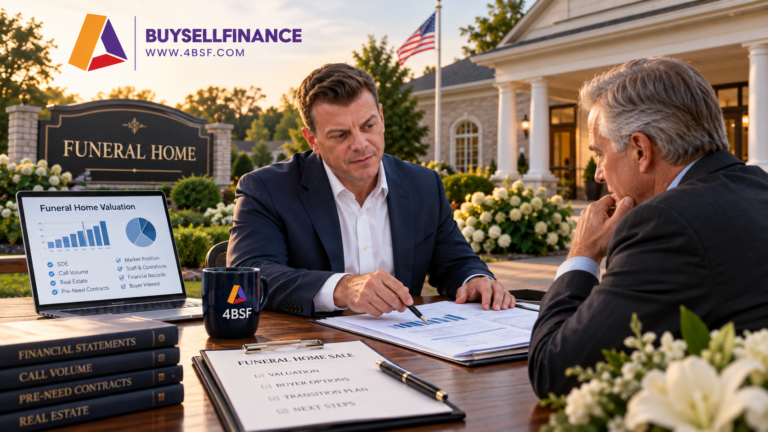
What Is My Funeral Home Actually Worth in 2026? A Complete Valuation Guide
Read guide →
Sell Your Funeral Home in Ohio
Read guide →
How to Sell a Funeral Home in New York: What Owners Need to Know
Read guide →
How to Prepare Your Funeral Home for Sale: A Practical Checklist
Read guide →Ready to discuss selling your Pennsylvania funeral home?
- You don't have to decide today.
- You don't have to list your funeral home publicly.
- And you don't have to accept the first offer you receive.
The first step can simply be a confidential conversation about your funeral home, your goals, your timeline, and what the business may realistically support. Talk directly with Matt Manske.
(913) 343-2357No public listing. No pressure. Just a private conversation about what comes next.