
How to Sell My Funeral Home: A Step-by-Step Guide for Owners
Selling a funeral home is a major business decision. For many owners, the process involves years of work, a strong local reputation, employees, families, real estate, and a business that may have been part of the community for generations.
If you’re thinking about selling, you don’t have to figure everything out at once. The first step is understanding what your funeral home is worth, what a buyer will look at, and how to move through the sale without creating unnecessary disruption.
This guide explains the process in simple terms and outlines what funeral home owners should consider before putting their business on the market.
1. Decide Why You Want to Sell
Before discussing price or buyers, it helps to understand why you’re considering a sale.
Many owners reach this point because they’re:
- Planning retirement
- Ready to step away from the business
- Burned out after years of operating the funeral home
- Considering family succession
- Looking for a partner or transition
- Ready to pursue another opportunity
Your reason for selling can affect how you approach the transaction.
For example, an owner planning retirement may want a clean transition, while another owner may want to remain involved for a period of time after the sale.
There is no single right way to structure an exit. The important thing is to understand what you want the transaction to accomplish before you begin negotiating.
2. Determine What Your Funeral Home Is Worth
One of the first questions almost every owner asks is:
“What is my funeral home worth?”
A proper valuation should look at the business as a whole rather than relying on a simple revenue calculation.
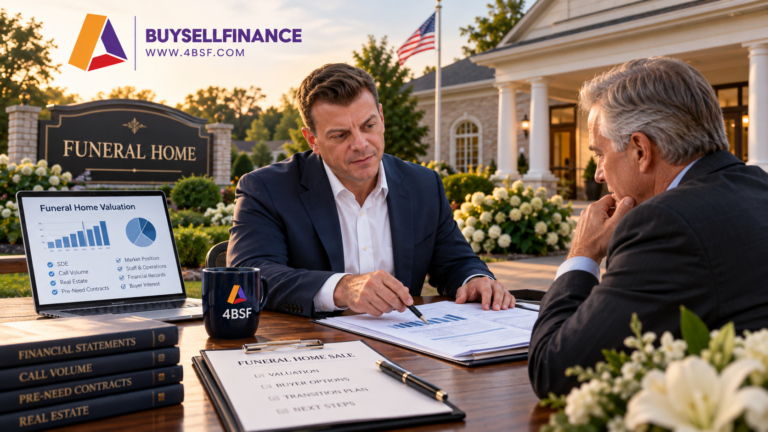
One important measure is Seller’s Discretionary Earnings (SDE). SDE helps show the economic benefit the business provides to its owner after appropriate adjustments.
Other factors can include:
- Annual call volume
- Historical financial performance
- Recent financial trends
- Local market position
- Pre-need contracts
- Funeral home facilities
- Owned real estate
- Equipment and other assets
- Community reputation
- Competition in the local market
- The characteristics of potential buyers
You can learn more about the factors involved in a funeral home valuation before beginning the selling process.
The goal isn’t simply to choose a number that sounds attractive. The valuation should help establish a realistic understanding of what a qualified buyer may be able to pay.
3. Get Your Financial Records in Order
A buyer will want to understand how the funeral home has performed financially.
Before approaching buyers, gather the information needed to explain the business clearly.
This may include:
- Recent tax returns
- Profit and loss statements
- Balance sheets
- Bank statements
- Revenue records
- Call volume history
- Pre-need information
- Payroll information
- Major expenses
- Real estate information
- Equipment information
- Existing debt
You should also be prepared to explain unusual expenses or changes in the business.
For example, if one year included a major building improvement or another unusual expense, that should be documented rather than left for a buyer to discover during due diligence.
Good preparation makes the process easier for everyone involved.
4. Understand What Drives Funeral Home Value
Not every funeral home is valued in exactly the same way.
A buyer may look at several parts of the business before deciding what the opportunity is worth.
Call Volume
The number of calls a funeral home handles each year is an important part of understanding the business.
Buyers will also want to see whether call volume has been stable, increasing, or declining.
A consistent history can help a buyer understand the underlying operation and future opportunity.
Seller’s Discretionary Earnings
SDE is another major consideration because it helps show the financial benefit available to the owner.
This is why your financial records need to be accurate and well organized.
Real Estate
If you own the funeral home building and property, the real estate can be an important part of the transaction.
The business and real estate may need to be considered separately depending on how the transaction is structured.
Pre-Need Contracts
Pre-need arrangements can add another layer to the transaction.
Buyers may need to understand the number of contracts, how they are funded, and the applicable requirements before completing due diligence.
Market Position
A funeral home’s reputation and position in its community can also matter.
A business with established relationships and a recognizable local presence may offer a different opportunity to a buyer than a business without the same market position.
5. Decide Whether You Need an Advisor
A funeral home sale involves more than finding someone who wants to buy the business.
There can be financial questions, negotiations, due diligence, financing, real estate considerations, transition planning, and confidentiality concerns.
This is where a transaction advisor can help guide the seller through the process.
Matt Manske works as a transaction advisor for funeral home owners and brings 20 years of experience in SBA lending. His role is focused on helping owners understand and navigate the transaction rather than simply putting a business on a public listing.
For owners comparing different approaches, our guide to funeral home valuation can help explain the financial side of the process.
6. Keep the Sale Confidential
Confidentiality is an important concern for many funeral home owners.
You may not want employees, families, competitors, vendors, or other members of the community to learn about a potential sale before the appropriate time.
A confidential process can help reduce unnecessary disruption while discussions are taking place.
Before sharing detailed information about the business, sellers should understand:
- Who will receive the information
- What information will be shared
- When information will be shared
- How confidential information will be protected
- How potential buyers will be evaluated
The goal is to allow serious discussions to happen without unnecessarily affecting the day-to-day operation of the funeral home.
7. Find the Right Buyer
Finding a buyer isn’t simply about finding someone who can offer a high number.
A qualified buyer also needs to be able to complete the transaction.
That can involve:
- Financial capability
- Financing
- Experience
- Operational plans
- Understanding of the local market
- Ability to satisfy transaction requirements
- Agreement on the structure of the deal
This is particularly important when financing is involved.
A buyer may need to obtain financing before a transaction can move forward. 4BSF also provides separate educational information about SBA financing for funeral homes.
8. Review Offers Carefully
When an offer arrives, don’t look only at the headline purchase price.
The structure of the offer matters.
You may need to consider:
- Purchase price
- Cash at closing
- Financing
- Seller financing, if applicable
- Real estate
- Assets included in the transaction
- Transition period
- Contingencies
- Closing conditions
- Timing
- Other contractual terms
Two offers with similar headline prices can have very different terms.
This is why sellers should understand the complete structure of an offer before deciding how to proceed.
9. Go Through Due Diligence
Once a buyer is seriously interested, the transaction usually moves into a more detailed review.
The buyer may examine financial records, contracts, real estate, operations, employees, assets, liabilities, and other business information.
This stage can feel extensive, but preparation helps.
If your records are organized and your business information is consistent, questions can usually be answered more efficiently.
The earlier you prepare this information, the fewer surprises you’re likely to encounter during the transaction.
10. Plan the Transition
Selling the funeral home doesn’t necessarily mean everything changes on closing day.
Depending on the agreement, the seller may have a role in the transition.
The parties may need to determine:
- How long the seller remains available
- How families are introduced to the new owner
- How employees are informed
- How vendors are transitioned
- How records are transferred
- Whether the seller provides training
- When operational control changes
A clear transition plan can help protect the continuity of the business and make the change easier for everyone involved.
How Long Does It Take to Sell a Funeral Home?
There isn’t one fixed timeline for every funeral home sale.
The timing can depend on:
- Preparation
- Valuation
- Finding a qualified buyer
- Buyer financing
- Due diligence
- Real estate
- Negotiations
- Legal documentation
- Closing requirements
Some transactions can move relatively quickly, while others take longer because of financing, property issues, or negotiations.
The important thing is to avoid choosing a timeline before understanding the transaction itself.
Should You Sell Your Funeral Home Now or Wait?
This is a personal business decision.
Some owners may be ready to retire. Others may want to continue operating for several more years.
Before making the decision, consider:
- Your personal goals
- Business performance
- Call volume trends
- Financial performance
- Local market conditions
- Real estate
- Potential buyers
- Your desired transition timeline
Even if you’re not ready to sell immediately, understanding the value of the business and preparing your records can put you in a stronger position when the time comes.
What Should You Do Before Contacting a Funeral Home Advisor?
You don’t need to have every answer before starting a conversation.
However, it helps to have basic information available:
- Your approximate annual call volume
- Recent financial statements
- Tax returns
- Information about the property
- Pre-need information
- Your reason for considering a sale
- Your preferred timeline
- Any concerns about confidentiality
From there, an advisor can help identify what needs to happen next.
Frequently Asked Questions
How much is my funeral home worth?
The value depends on several factors, including SDE, call volume, financial performance, real estate, pre-need contracts, market position, and the structure of the transaction. A professional valuation can provide a more useful starting point than a simple revenue multiple.
Do I have to publicly list my funeral home for sale?
Not necessarily. Funeral home owners may have concerns about confidentiality and may prefer a more controlled process rather than a public listing.
Should I sell the funeral home building with the business?
That depends on the owner’s goals and the structure of the transaction. Business assets and real estate can be considered separately when appropriate.
What if I am planning to retire?
Retirement is one common reason owners begin exploring a sale. Starting early can give you more time to understand your options and prepare the business.
Can I sell if I haven’t made a final decision?
Yes. An initial conversation can be used to understand your options without committing to a transaction.
What information does a buyer need?
A buyer will generally want to understand the financial performance, operations, assets, liabilities, property, contracts, and other aspects of the business during due diligence.
Thinking About Selling Your Funeral Home?
You don’t have to wait until you’re ready to sign a purchase agreement to start planning.
Understanding your funeral home’s value, organizing your financial information, and understanding the potential sale process can help you make a more informed decision.
Matt Manske works directly with funeral home owners who are considering a sale, retirement, or transition. He is a banker with 20 years of SBA lending experience and focuses on helping owners navigate the transaction process.
If you’re considering selling your funeral home, call Matt directly at (913) 343-2357 to discuss your situation confidentially.
About the Author
Matt Manske is a funeral home transaction advisor and banker with 20 years of experience in SBA lending. He works with funeral home owners who are considering a sale or transition and helps them understand valuation, transaction structure, buyer considerations, and the overall sale process.
Helpful next steps for this topic



Please Share this Article if you think others would find it Informative:
