
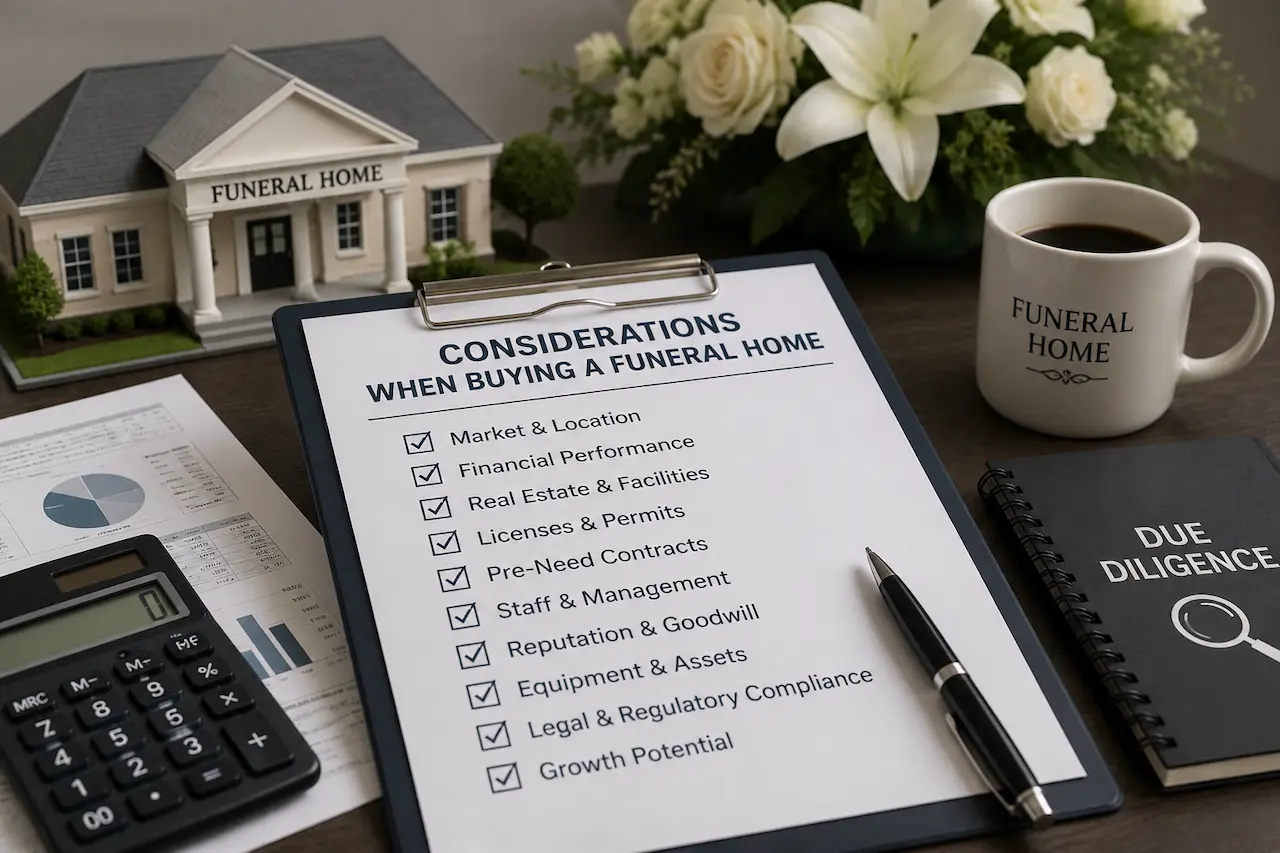
Considerations When Buying a Funeral Home
Buying a funeral home through an asset purchase involves evaluating valuation, tax treatment, liabilities, contracts, and staffing before you commit to a deal. We always advise clients to work through these factors early, since overlooking any one of them can affect both the purchase price and your risk after closing.
- Valuation of Assets: Assess the value of tangible and intangible assets, including inventory, equipment, real estate, intellectual property, customer lists, and goodwill. Ensure the valuation is fair and accurately reflects the business’s worth.
- Tax Implications: Asset purchases can offer tax benefits, such as depreciating certain assets, but also may trigger sales or transfer taxes. The allocation of purchase price among different asset categories will affect both the buyer’s and seller’s tax liabilities.
- Liabilities and Debts: Unlike a stock purchase, where all liabilities transfer with the business, an asset purchase allows the buyer to avoid assuming existing debts, legal obligations, or potential lawsuits. However, some liabilities may still transfer (e.g., environmental or product liability).
- Contracts and Leases: Review existing contracts, such as supplier agreements, customer contracts, and leases, to determine which ones are transferable. Some may require renegotiation or permission from third parties.
- Employees and Benefits: Decide whether to retain existing employees or hire new ones. In an asset purchase, employee contracts typically do not transfer automatically, and you may need to negotiate new terms or provide new benefits.
- Inventory and Equipment: Ensure that the inventory and equipment are accurately assessed and in good condition. You’ll also need to determine how to handle any obsolete or excess inventory.
- Customer and Supplier Relationships: Consider the strength of customer and supplier relationships, as these are often key to the ongoing success of the business. You may need to work on retaining these relationships post-acquisition.
- Legal and Regulatory Compliance: Ensure the business complies with relevant local, state, and federal regulations. This includes any necessary licenses, permits, or environmental compliance.
- Due Diligence: Conduct thorough due diligence to identify any hidden issues, such as pending lawsuits, tax liabilities, or environmental hazards that could affect the value of the business or your responsibilities after the purchase.
- Non-Compete Agreements: Negotiate a non-compete clause with the seller to prevent them from starting a competing business in the same market, protecting your investment.
These factors help ensure that the buyer understands the full scope of the business and any risks involved in the transaction.
FAQS
Q: What is an asset purchase when buying a funeral home?
An asset purchase means you buy specific assets, such as equipment, real estate, and goodwill, rather than acquiring the company itself. This structure lets you avoid assuming most existing debts and legal liabilities tied to the prior ownership.
Q: Do liabilities transfer with an asset purchase?
In most cases, no. Unlike a stock purchase, an asset purchase generally lets you avoid the seller’s existing debts and legal obligations, though some liabilities, such as environmental issues, can still transfer depending on how the deal is structured.
Q: What due diligence should I do before buying a funeral home?
We prioritize a strategy that uncovers hidden risks early, including pending lawsuits, tax liabilities, and environmental hazards, before they affect the value of the business or your responsibilities after closing.
Q: Do employees automatically transfer in an asset purchase?
No. Employee contracts typically don’t carry over automatically in an asset purchase. You’ll need to decide whether to retain existing staff and negotiate new terms and benefits directly with them.
Q: Why does a non-compete agreement matter when buying a funeral home?
A non-compete clause protects your investment by preventing the seller from opening a competing business in the same market shortly after the sale, which could otherwise draw families and revenue away from the funeral home you just purchased.
Helpful next steps for this topic





Please Share this Article if you think others would find it Informative:
